
Best CRM for HVAC Companies: Proven Picks for Maintenance Renewals and Seasonal Growth
An HVAC company owner once described their simplest and most effective sales practice: any AC unit installed more than twelve years ago gets a friendly call before summer — not a sales pitch, just a heads-up that the unit’s getting to an age where a mid-August breakdown becomes more likely. Most customers said thanks and hung up. A few, every year, decided to replace on their own schedule rather than risk a failure during a heatwave. Those calls consistently produced the best-margin, least-stressful sales of the year — not through persuasion, just because nobody else was tracking equipment age and calling before the emergency happened. A good CRM makes that kind of proactive outreach systematic rather than something only the most organised owner manages to do.
The best CRM for HVAC companies handles customer records with equipment history, seasonal campaign automation, maintenance agreement renewals, quote follow-up, and lapsed customer re-engagement — the five areas where HVAC businesses most consistently leave recurring revenue unclaimed. This guide covers the top platforms for 2026.
Why HVAC Is Really Two Different Businesses
Emergency HVAC work — the no-AC-in-July call, the furnace that died on the coldest night of the year — will always exist and always convert, because there’s no time to shop around when it’s 95 degrees. But it’s also reactive, stressful, and impossible to plan around. The real growth lever in HVAC is the other half: planned maintenance, proactive replacements, and renewal conversations that happen calmly rather than during a crisis. That’s only possible if someone is actually tracking which customers have older systems, expired warranties, or maintenance agreements coming due. A well-configured CRM is what makes this tracking systematic rather than dependent on one person’s memory.
IBISWorld’s HVAC industry research consistently finds that maintenance agreement revenue is the most stable and highest-margin segment of HVAC business — far more predictable than emergency call volume, which varies with weather — and that contractors with systematic maintenance customer programmes significantly outperform those relying entirely on reactive service calls.
What the Best CRM for HVAC Companies Needs to Do
Equipment records against every customer. Installation date, unit model, warranty expiry, service history — accessible to whoever’s dispatched, without requiring the customer to re-explain their system every visit. The best CRM for HVAC companies makes this available on a phone, on-site, before walking in the door.
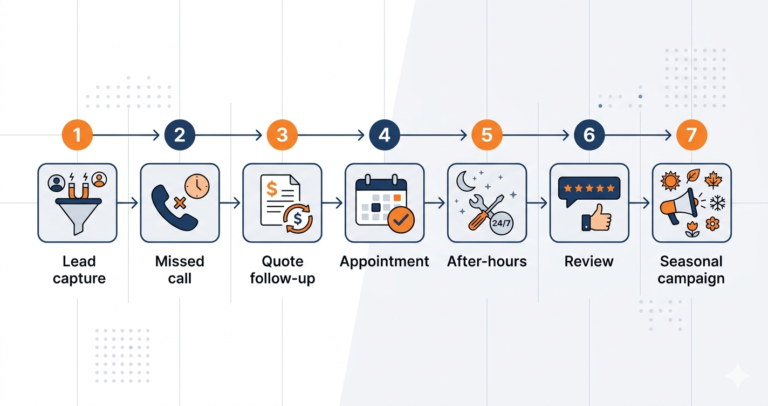
Seasonal campaign automation. A spring AC tune-up reminder and a fall furnace check reminder, sent to the right customers every year without anyone manually compiling a list and writing individual emails, keeps technicians productively booked during shoulder seasons and keeps the company front of mind before the weather turns rather than scrambling after it does.
Maintenance agreement renewal reminders. A lapsed maintenance agreement is usually a forgotten renewal rather than a decision to leave. An automated reminder sent thirty days before expiry, with a simple renewal link, recovers a real share of these without any manual tracking of which agreements are coming up.
Quote follow-up for replacement proposals. A customer who received a replacement quote and hasn’t responded isn’t necessarily shopping elsewhere — they’re often still deciding. An automated follow-up at three days and seven days after sending a proposal recovers a meaningful share of these without the technician having to remember to chase manually.
Post-service review requests. Google reviews drive local search visibility for HVAC companies more than almost any other factor. An automated review request sent the day after a successful service call — while the customer has working air conditioning and is satisfied — converts at far higher rates than asking weeks later.
Our Top Picks: Best CRM for HVAC Companies in 2026
1. Systeme.io — Best CRM for HVAC Companies Starting Out
Systeme.io is the best CRM for HVAC companies that want seasonal campaigns, maintenance agreement renewal automation, quote follow-up, and review requests at zero cost. Free for up to 2,000 contacts, it covers the customer communication side of an HVAC business — the seasonal emails, the agreement renewal reminders, the post-service review request — without a monthly subscription.
For HVAC companies of one to five technicians primarily doing residential service, Systeme.io’s automation builder handles the highest-value sequences without the overhead of a full field service platform. The seasonal campaign alone — a spring AC tune-up reminder sent to every customer with a system over five years old — consistently drives bookings during the shoulder months when technician time is available but inbound calls are slower.
❄️ Best free CRM for HVAC companies
Seasonal campaigns, maintenance renewal reminders, quote follow-up, and review requests — free for up to 2,000 contacts. No credit card required.
2. Zoho CRM — Best CRM for HVAC Companies With a Growing Team
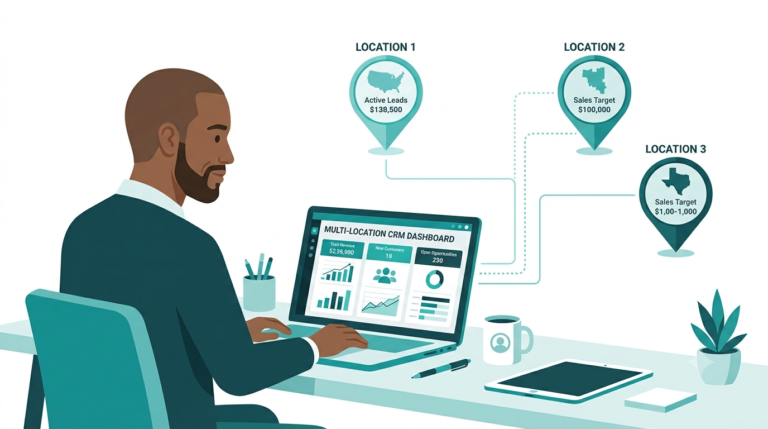
Zoho CRM is the best CRM for HVAC companies managing multiple technicians, service coordinators, and commercial alongside residential accounts. Free for up to three users with workflow automation on the free tier, it handles multi-user customer management — routing new service calls to the right technician, automating seasonal campaigns across the full customer base, and maintaining shared equipment records accessible to the whole team.
Zoho’s native connection to Zoho Bookings allows customers to self-schedule maintenance appointments without phone-tag, and Zoho Invoice handles billing directly from completed service records. Zoho’s field service case studies include a number of HVAC and trades businesses that scaled from small operations to larger teams on the platform without switching CRM systems as they grew.
✓ Best CRM for growing HVAC teams
Free for up to 3 users with workflow automation, self-booking, invoice integration, and the full Zoho ecosystem.
3. Pipedrive — Best CRM for HVAC Companies Winning Commercial Contracts
Pipedrive is the best CRM for HVAC companies actively bidding commercial contracts — property management companies, multi-unit residential, office buildings — where the sales cycle runs weeks and several proposals are in play simultaneously. Its visual pipeline makes it immediately obvious which commercial bids need follow-up and which have stalled, and its deal rotting alerts flag any proposal that hasn’t had contact recently.
For HVAC contractors growing their commercial account base alongside residential service work, Pipedrive keeps the commercial pipeline visible without manual tracking. At $14/user/month, it earns its cost by preventing even one commercial proposal per month from going cold through inaction.
📊 Best for HVAC companies bidding commercial contracts
Visual pipeline and deal rotting alerts keep every commercial proposal tracked. From $14/user/month.
CRM vs Field Service Platform for HVAC
Dedicated HVAC field service platforms like ServiceTitan, Housecall Pro, or FieldEdge add features specifically built for HVAC operations — GPS dispatch, technician mobile apps, flat-rate pricing books, and financing integration. For companies with ten or more technicians where real-time dispatch coordination is the daily challenge, these platforms earn their higher monthly cost.
The best CRM for HVAC companies at the small to mid-size level focuses on the customer relationship side — seasonal campaigns, maintenance renewals, quote follow-up, and review requests. Many growing HVAC businesses use both: a CRM for the marketing and customer retention side, and a field service tool for the dispatch side. The platforms above accommodate that two-tool approach at lower combined cost than most HVAC-specific platforms.
How to Choose the Best CRM for HVAC Companies
Residential HVAC, one to five technicians: Systeme.io’s free plan. Seasonal campaigns, maintenance renewal reminders, quote follow-up, and review requests without any monthly cost.
Growing team, commercial and residential mix, multiple users needed: Zoho CRM’s free tier for three users with workflow automation, self-booking, and invoice integration.
Actively bidding commercial contracts with a dedicated sales function: Pipedrive at $14/month. Visual pipeline and deal rotting alerts keep every commercial proposal visible.
The Two Numbers Worth Checking
How many customers have systems over twelve years old — and how many maintenance agreements lapsed in the last twelve months without anyone following up? Most HVAC owners find both numbers are larger than expected. Both represent proactive, low-pressure sales conversations sitting unclaimed in a customer list they already have. The best CRM for HVAC companies turns both into automated outreach that happens consistently rather than depending on someone remembering to act.
Frequently Asked Questions
What is the best free CRM for HVAC companies?
Systeme.io — free for up to 2,000 contacts with email automation included. It’s the only platform in this comparison that provides seasonal campaigns, maintenance renewal reminders, and quote follow-up on the free tier, making it the clearest starting point for residential HVAC operations.
Does the best CRM for HVAC companies replace a field service platform?
They solve different problems. The best CRM for HVAC companies manages the customer relationship side — seasonal campaigns, maintenance renewals, quote follow-up, review requests. A field service tool manages dispatch, technician scheduling, flat-rate pricing, and on-site operations. Most growing HVAC businesses eventually use both.
How does CRM automation help HVAC companies with maintenance agreements?
By sending renewal reminders automatically — thirty days before each agreement expires, with a renewal link — without requiring anyone to manually track which agreements are coming up across the full customer base. Lapsed agreements recovered this way are typically the highest-margin work in the business, since the customer relationship is already established.
Compare the Best CRM for HVAC Companies
Related reading: our guides on the best CRM for plumbers, best CRM for electricians, and CRM for recurring revenue service businesses.
Affiliate Disclosure: This article contains affiliate links. If you click through and make a purchase, we may earn a commission at no additional cost to you. We only recommend products we believe add real value to our readers.