
Best CRM for Electrical Contractors: Proven Tools for Scheduling, Billing & Growth in 2026
An electrical contracting owner we spoke with once discovered, almost by accident, that his crew had been quietly under-billing a commercial client for months — a change order approved verbally on-site had never made it into the paperwork, and by the time anyone noticed, thousands of dollars in legitimate work had simply gone unbilled. Nobody was trying to give work away. The information just existed in one person’s memory of a site conversation and nowhere else, which is a bad place for billable work to live.
Why growing past a few technicians changes everything
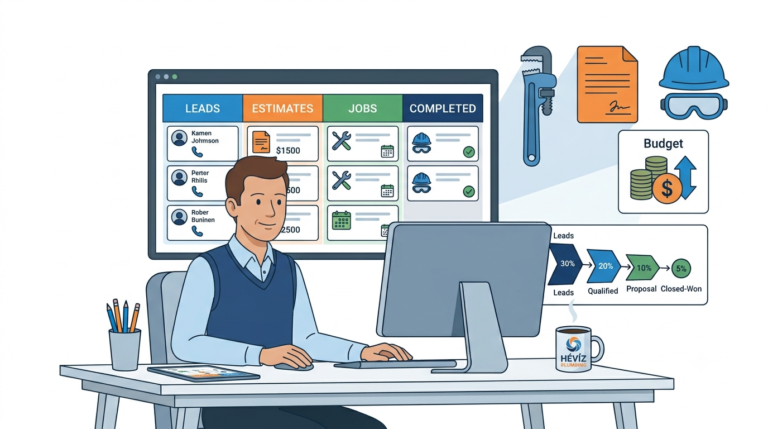
A one- or two-person electrical operation can run on the owner’s memory reasonably well — he knows every client, every job, every quote. That stops working the moment there’s a real team: multiple crews on different sites, commercial accounts with several contacts each, change orders happening verbally in the field that need to make it back to the office intact. The operational gap that opens up here isn’t really about better sales technique — it’s about information that used to live in one person’s head needing to live somewhere everyone can actually see it.
Commercial accounts need a different kind of tracking
A residential customer is one relationship. A commercial account is usually several — a facilities manager, someone in accounts payable, sometimes an operations director — each needing to see different information at different times. Progress billing, change orders, contract renewal dates: none of this fits neatly into a system built around a single homeowner contact, and treating a commercial account like a residential one is exactly how details like that verbal change order get lost.
The certification problem nobody talks about until it’s a liability
Sending the wrong level of technician to a job that requires specific licensing isn’t just an inefficiency — it’s a real legal exposure. Knowing at a glance who’s certified for what, and making sure dispatch decisions actually respect that, matters more in electrical work than in most trades precisely because the stakes of getting it wrong are higher than a bad customer experience.
Where the real money leaks: billing and collections
Manual billing on electrical projects routinely misses billable work — a forgotten change order, materials that were used but never invoiced, overtime that slipped through. None of this is deliberate; it’s just what happens when billing depends on someone remembering every detail of a complex job rather than a system that captures it as it happens. On top of that, commercial clients are notoriously slow payers without a structured follow-up cadence — automated reminders at set intervals routinely cut payment collection time roughly in half compared to ad hoc chasing.
What actually fits, depending on your scale
For most electrical contractors below the large-commercial tier, Systeme.io or Zoho CRM cover the customer management, follow-up, and billing-reminder side well — Zoho especially once there’s a real team needing shared visibility.
For contractors doing genuinely large commercial, industrial, or government work, a construction-specific platform like Procore handles the depth of change-order tracking and compliance documentation that a general CRM simply isn’t built for.
For most electrical contracting operations: Zoho CRM’s free tier covers shared team visibility across quotes, jobs, and accounts as you grow past a solo operation.
Worth checking honestly
If a change order got approved verbally on a job site this week, is there any guarantee it makes it into the actual invoice? Most growing electrical contractors find the honest answer is “depends who was there” — which is exactly the gap worth closing before it costs real money.
Related reading
This article contains a small number of affiliate links (marked above). We only recommend tools we’d genuinely suggest to an electrical contractor asking us directly.