
The Referral That Got Away: Why Bookkeepers Lose Clients to Slow Follow-Up
A bookkeeper gets a referral from a happy client, sends a warm intro email, and then… life happens. Three other clients need reconciliations this week, a deadline’s looming, and the follow-up she meant to send in two days becomes two weeks. By then the referral’s already signed with someone else — probably someone no better, just someone who replied.
This is the quiet way bookkeeping practices lose growth. Not to worse pricing or weaker skills, just to the ordinary busyness of running client work leaving no room to chase new ones.
Why a Missed Follow-Up Costs More Here Than It Looks Like
A signed bookkeeping client is worth years of monthly retainer revenue, which makes losing one to a forgotten follow-up a lot more expensive than it feels at the time. AICPA practice management research found that accounting and bookkeeping practices running a dedicated CRM convert noticeably more proposals into signed clients than those working purely from an email inbox — mostly because the CRM keeps chasing when the bookkeeper genuinely doesn’t have time to.
What Actually Deserves Automation
A proposal follow-up sequence that doesn’t rely on memory. Most proposals get one email and then silence. A sequence checking in at day three, day seven, and day fourteen recovers a real share of “yes, I just got busy” clients who would otherwise quietly go elsewhere.
A structured onboarding sequence the moment someone signs. A welcome message, a document checklist, and a first-meeting booking link firing automatically makes the first impression consistent, rather than depending on whatever the bookkeeper remembers to send that week.
Renewal flags well before a retainer’s actual end date. A reminder thirty days out gives time to show the year’s results and pitch expanded scope, instead of the relationship just quietly not getting renewed.
A referral ask at the right moments. Three months in, and again around the one-year mark, are natural points to ask a happy client if they know anyone else who could use the same help — most bookkeepers just never get around to asking.
The Pipeline Stages Worth Tracking
| Stage | What Should Happen |
|---|---|
| New Enquiry | Acknowledge, book a discovery call |
| Discovery Call | Log business type, software used, monthly fee |
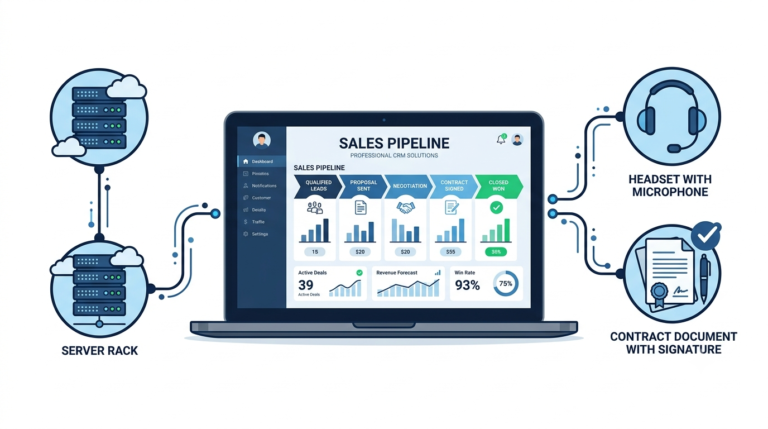
| Proposal Sent | Follow-up at day 3, 7, 14 |
| Retainer Signed | Onboarding sequence starts immediately |
| Active Retainer | Monthly check-in, renewal flag at 30 days |
| Referral Stage | Referral ask at month 3 and month 12 |
What I’d Actually Use
For a solo bookkeeper or small practice, Systeme.io covers this well at no real cost — free for up to 2,000 contacts, with automation flexible enough to run proposal follow-up, onboarding, and renewal reminders without much ongoing effort.
If you’re managing several proposals across different stages at once, Pipedrive‘s visual pipeline at $14/user/month makes it easy to see which ones are stalling before they go cold.
And for a growing practice with multiple bookkeepers serving different client segments, Zoho CRM‘s free tier for three users scales more gracefully, with custom fields for service type, monthly fee, and accounting software used.
A Question Worth Answering
Do I need a CRM, or is practice management software like Karbon enough?
They solve different problems. A CRM wins and retains clients — pipeline, proposals, renewals. Practice management software delivers the actual work — workflows, deadlines, deliverables. Most solo and small bookkeeping practices need the CRM side first; the practice tool becomes worth adding once team size and workflow complexity actually demand it.
Related reading: our guides on the best CRM for accountants and how to follow up on unsold estimates.
Affiliate Disclosure: This article contains affiliate links. We may earn a commission if you make a purchase, at no extra cost to you.