Slow lead follow up service business — How to Fix It in 2026 – Proven solutions
Two plumbers get the same enquiry from the same homeowner. One calls back in four minutes. The other calls back at 6pm, after finishing the day’s jobs. The first one gets the work almost every time — not because they were cheaper or had better reviews, just because they were still in the room when the decision got made. Most service businesses aren’t losing leads on price or reputation. They’re losing them to silence.
Fix your lead follow-up speed today
Systeme.io gives you instant automated follow-up sequences that fire the moment a lead arrives.
What the delay actually costs
Calling a lead within 5 minutes makes you roughly 100 times more likely to reach them than calling after 30 minutes, and contact rates fall by 80% after the first hour. Companies responding within an hour are nearly seven times more likely to have a real conversation with the decision-maker at all.
A business getting 40 leads a month with a 4-hour average response time converts around 15-20% of them. The same business responding in 5 minutes converts 35-45%. At $300 average job value, that’s the gap between roughly $2,000 and $5,000 a month from the exact same leads.
Why the delay happens
Leads scatter across too many places. Phone calls, web forms, Facebook messages, Google Business Profile, email – without one system pulling it together, some leads sit wherever nobody happened to be watching.
Follow-up depends on someone remembering. This is a capacity problem, not a motivation one – the person is on a job and the lead just waits.
Nothing signals urgency. Without a CRM, a hot new enquiry and a six-month-old cold lead look identical in the same inbox.
After-hours enquiries just wait. Roughly 40% of enquiries arrive outside business hours – see our guide on after-hours lead response.
Nobody can see the problem. Without a CRM tracking wait times, leads just seem to quietly not work out.
What the gap costs in dollars
| Scenario | Leads | Conversion | Revenue |
|---|---|---|---|
| Slow (4hr avg) | 50 | 18% | $2,700 |
| Fast (<5 min) | 50 | 38% | $5,700 |
| Difference | Same | Same | +$3,000 |
The fix: take the human out of the first response
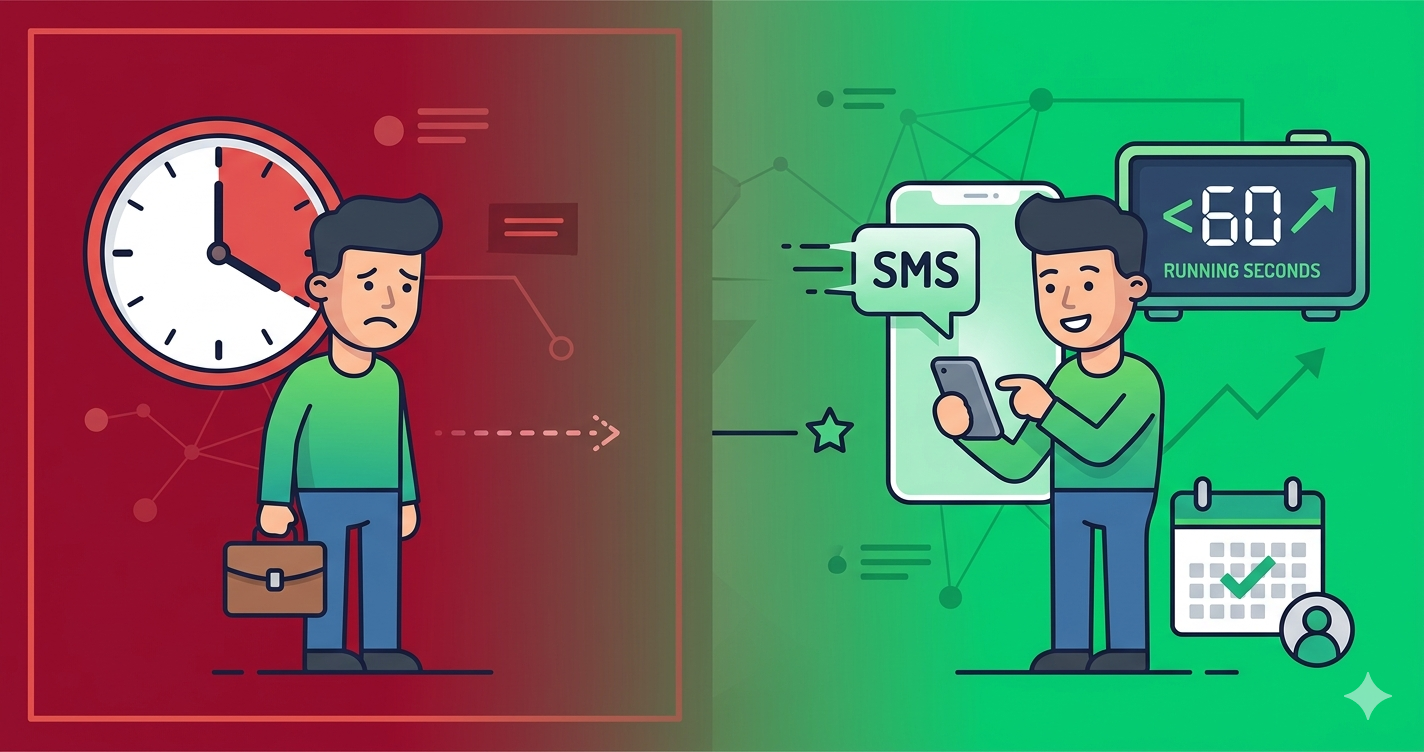
An automated SMS or email fires within 30-60 seconds of a lead arriving, no matter what the owner is doing. In practice: lead submits at 2:47pm while the owner is under a boiler; an automated SMS goes out at 2:47:30; a push notification alerts the owner at 2:48; the owner calls back at 3:02 once free; the lead is still warm, and booking rates run 3-4x higher than a cold 6pm callback.
Systeme.io fires your follow-up in under 60 seconds
Set up your instant lead response sequence in under an hour. Free plan available.
A quick 5-question audit
- Where do leads come from, and are they all landing in one place?
- What happens the second a lead arrives – does anything go out automatically?
- What’s the real average response time on your last 20 leads?
- What happens after hours – does an 8pm enquiry get anything before morning?
- What happens after a missed call – is there any follow-up at all?
Most owners discover their real average response time is 2-6 hours, far longer than assumed.
Tools that close the gap
GoHighLevel – for complete automation
Missed call text-back, lead capture workflows, and an AI conversation bot cover this comprehensively. See our guide on missed call automation.
Systeme.io – the budget option
Free automation handles instant email and SMS response at no cost, effective for businesses where most leads come through web forms and email.
Zoho CRM – for teams
Workflow automation handles instant response and assigns follow-up tasks with deadline alerts, useful once a business has 3+ staff.
Zoho CRM: team accountability for fast follow-up
Zoho CRM assigns every new lead to a rep with a 15-minute callback task and reports on team response times.
The 5-minute standard
Every new lead should get some form of contact within 5 minutes. An automated SMS acknowledging the enquiry meets that bar, and businesses hitting it consistently see lead-to-booking rates roughly double within 30 days.
Tracking whether it’s working
- Average first response time – under 5 minutes for the automated touch
- Contact rate – 75%+ with automation vs 40-50% manual
- Lead-to-booking conversion rate
- After-hours recovery rate
See CRM workflows for home service businesses and CRM automations for contractors.
Stop being the slow one
Systeme.io makes instant lead follow-up automatic. Free plan, set up in under an hour.
Pipedrive – deal rotting alerts
Set a rotting threshold per pipeline stage and any deal gone quiet gets visually flagged, giving reps a clear daily list of who needs a call. From $14/user/month.
Pipedrive: the visual CRM built for closing deals
Instant visibility over every lead, quote, and follow-up. From $14/user/month.
Compare our top CRM picks
The Five Ways Leads Usually Get Lost
1. Slow response time. When someone calls or fills out a contact form, they typically reach out to three to five service businesses simultaneously. The business that responds first usually wins the job. If you take 24 hours to respond, the lead has already booked with someone else.
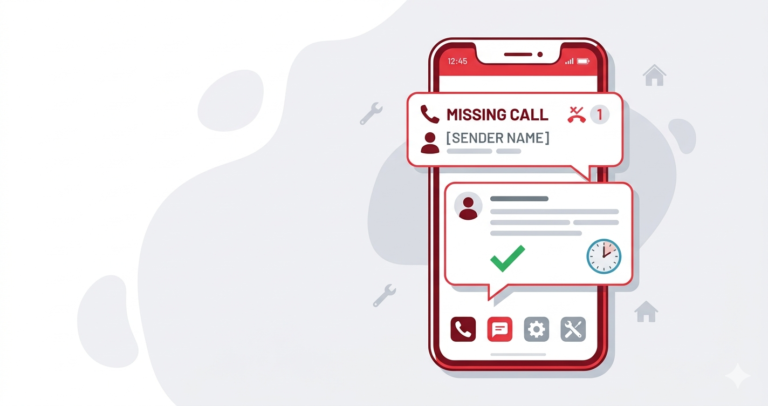
2. Missed calls and forgotten follow-ups. You’re on a ladder, in a meeting, or driving between jobs. The call goes to voicemail. You intend to call back but forget. The lead moves on. The fix is an automatic response to missed calls, so the window doesn’t close while you’re unavailable.
3. No systematic follow-up process. You send a quote via email. The customer doesn’t respond. You assume they’re not interested. In reality, they’re busy, comparing options, or simply waiting for you to follow up. Without a system, the lead dies silently.
4. Lost in spreadsheet chaos. Tracking leads through a combination of notebooks, text messages, email inboxes, and memory works at five leads a week. It breaks completely at twenty.
5. No lead scoring or prioritisation. Every lead gets the same attention, which means high-value ready-to-buy leads wait while time is wasted chasing unqualified ones.
Prioritising the Leads Most Ready to Buy
It also helps to focus your energy on the ones most likely to convert. A simple lead scoring system assigns points based on behaviour and characteristics.
Example scoring: requested specific service (+15), mentioned a timeframe (+20), opened follow-up email (+5), clicked quote link (+10), located in service area (+10). Leads above 40 points get an immediate call; leads below 20 get email nurture sequences only.
Frequently asked questions
How fast is actually fast enough?
Under 5 minutes for automated contact, under 30 for a human touch – every minute of delay measurably reduces conversion odds.
What about calls I miss?
Missed call text-back triggers an automatic SMS within 60 seconds – see our guide on CRM missed call automation.
Won’t an automated reply feel impersonal?
Only if written badly. A warm message using the lead’s name reads as professional, not robotic.
Is this really why jobs are being lost?
For most service businesses, yes – run the audit above and check the real numbers.
The bottom line
Most competitors are slow. Fixing response time is a durable advantage that costs nothing extra to build – just being first, made automatic.